C.E. James and his associates filed for a charter for the Chattanooga Traction Company.
Chattanooga Traction Company Timeline
-
-
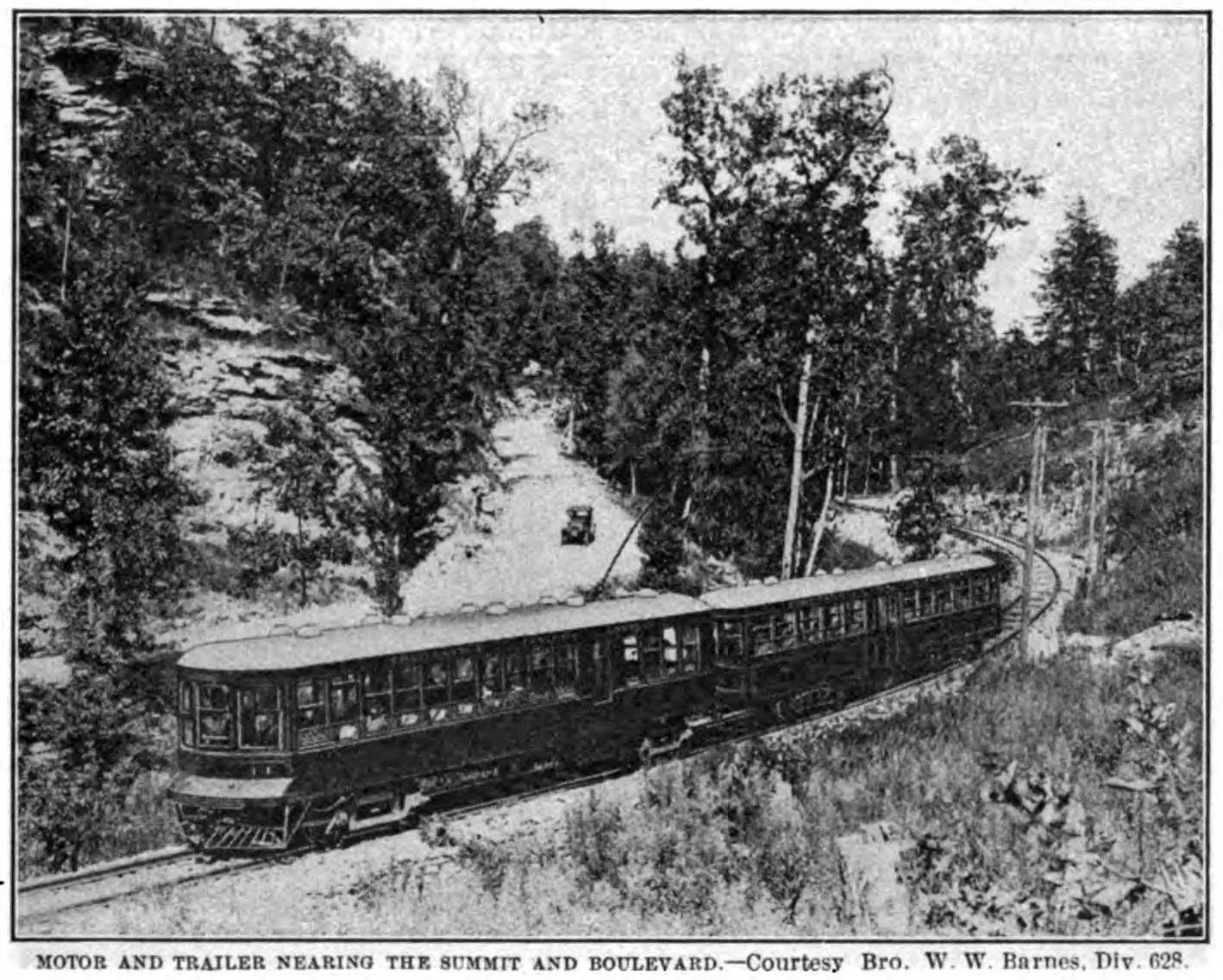
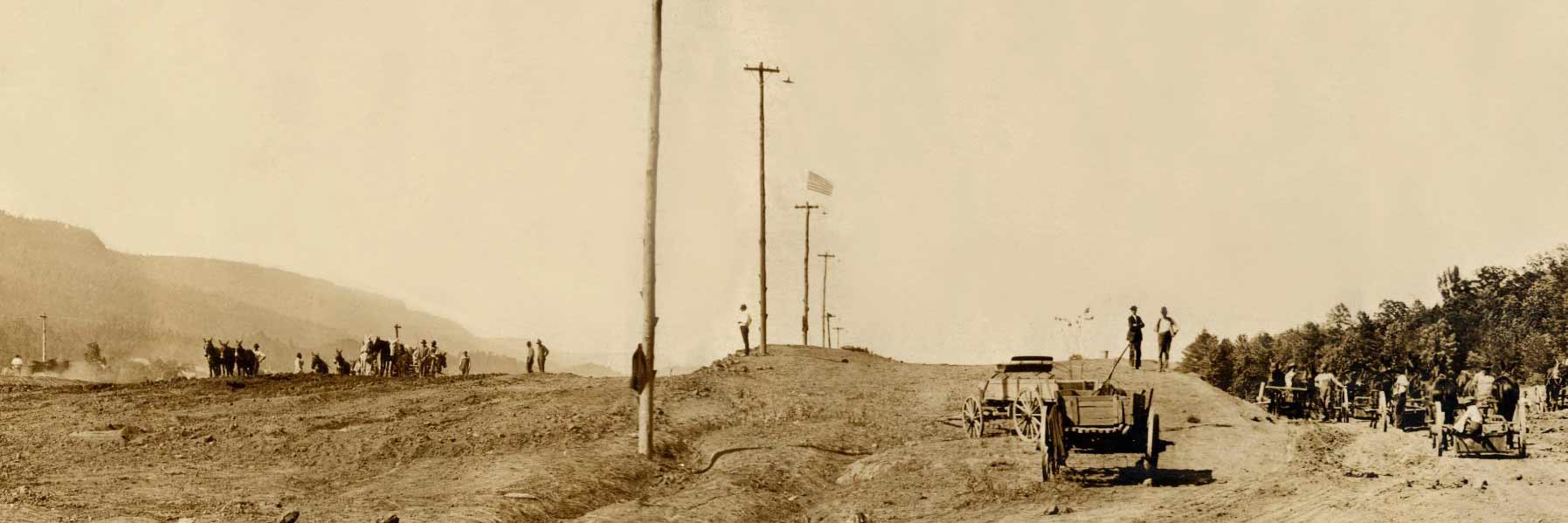
Grading the mountain line and building an adjacent 24-foot road begins.
-
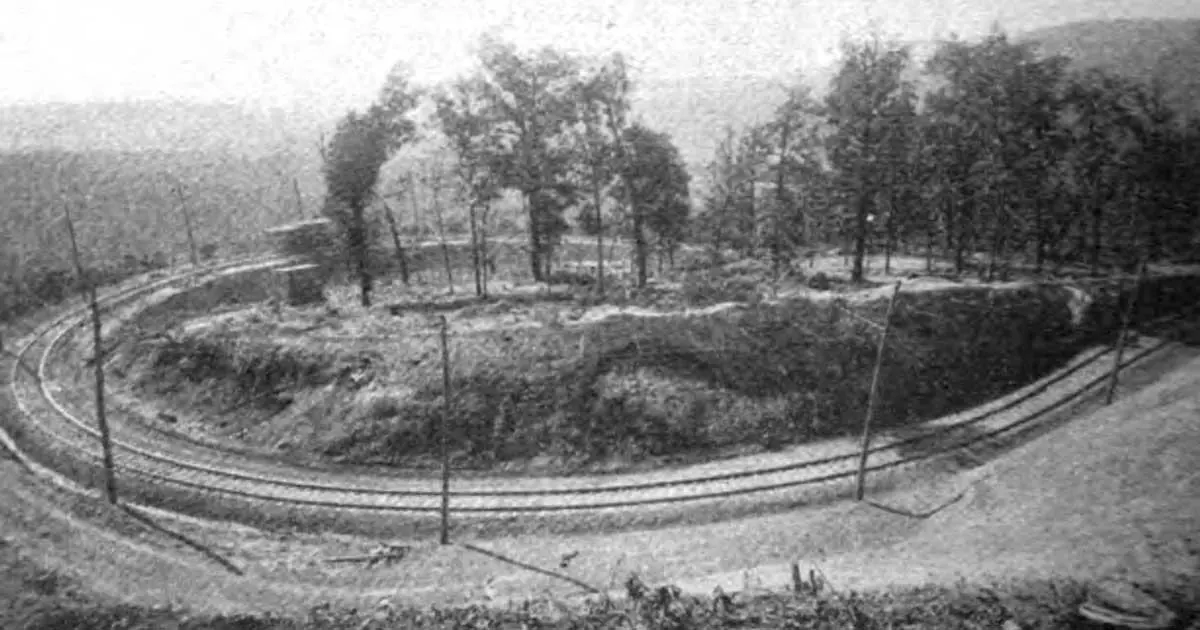
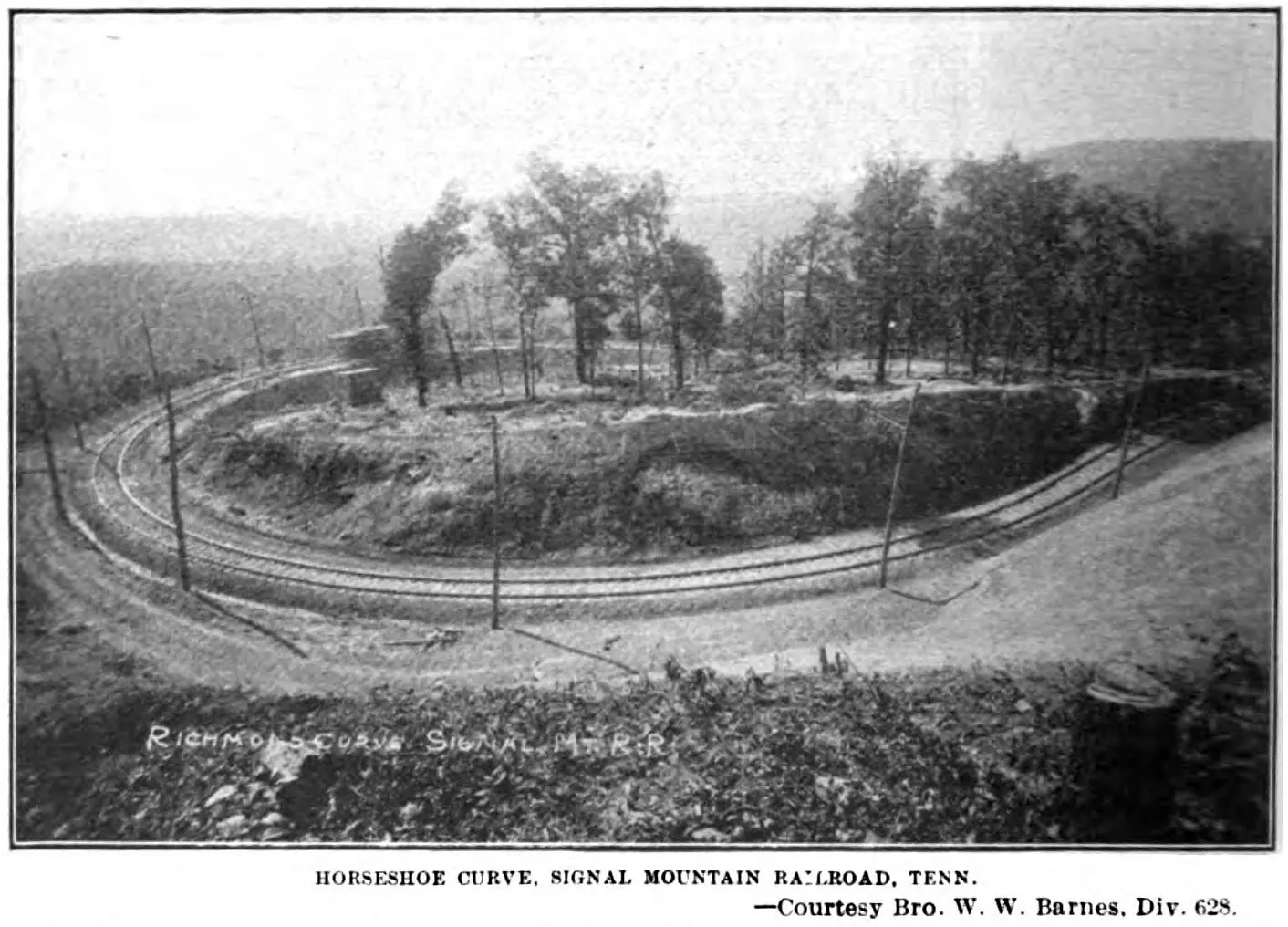
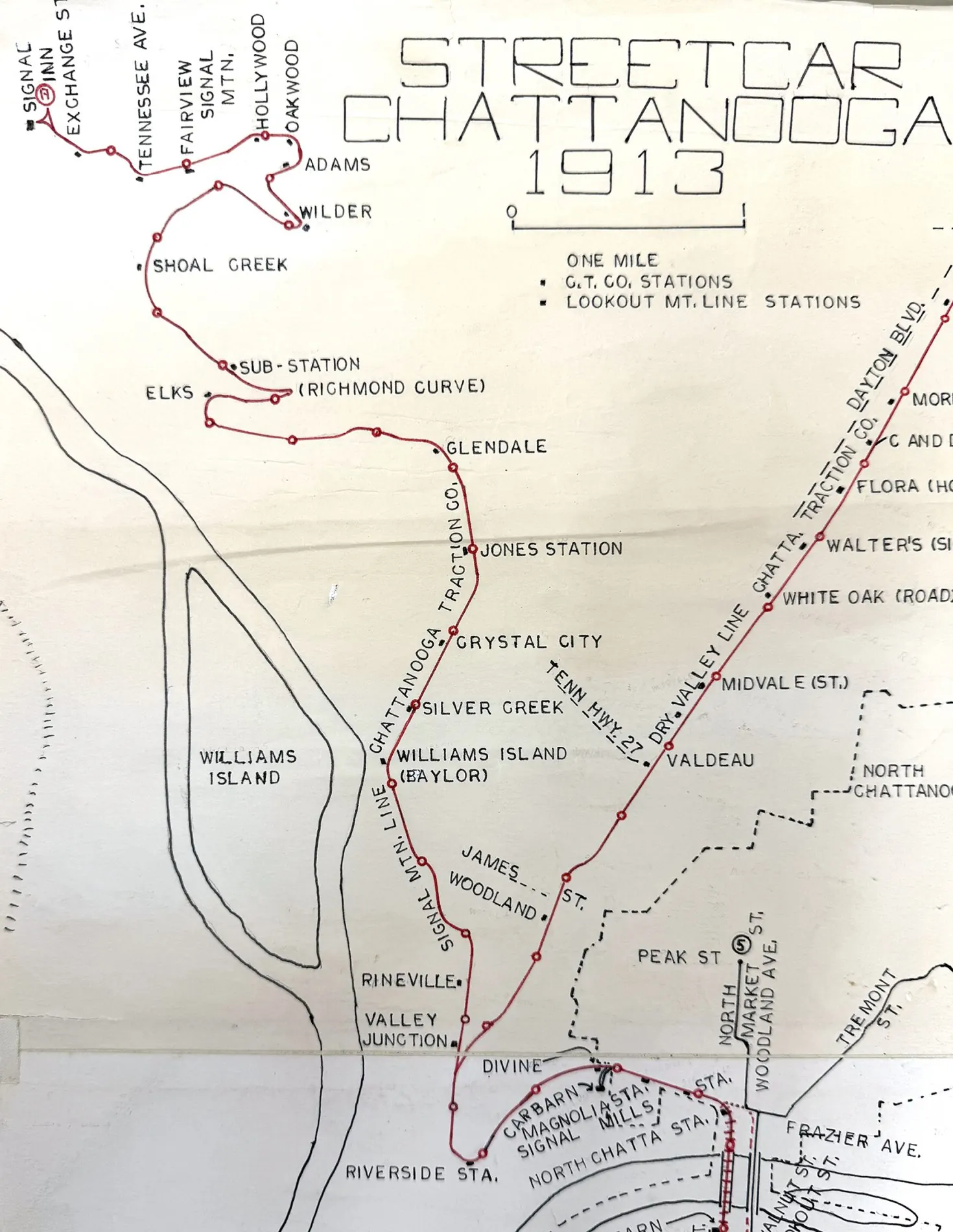
Richmond Curve
-
Grading work up Walden’s Ridge completed.
-
The first spike was driven at the corner of Frazier Avenue and North Market.
-
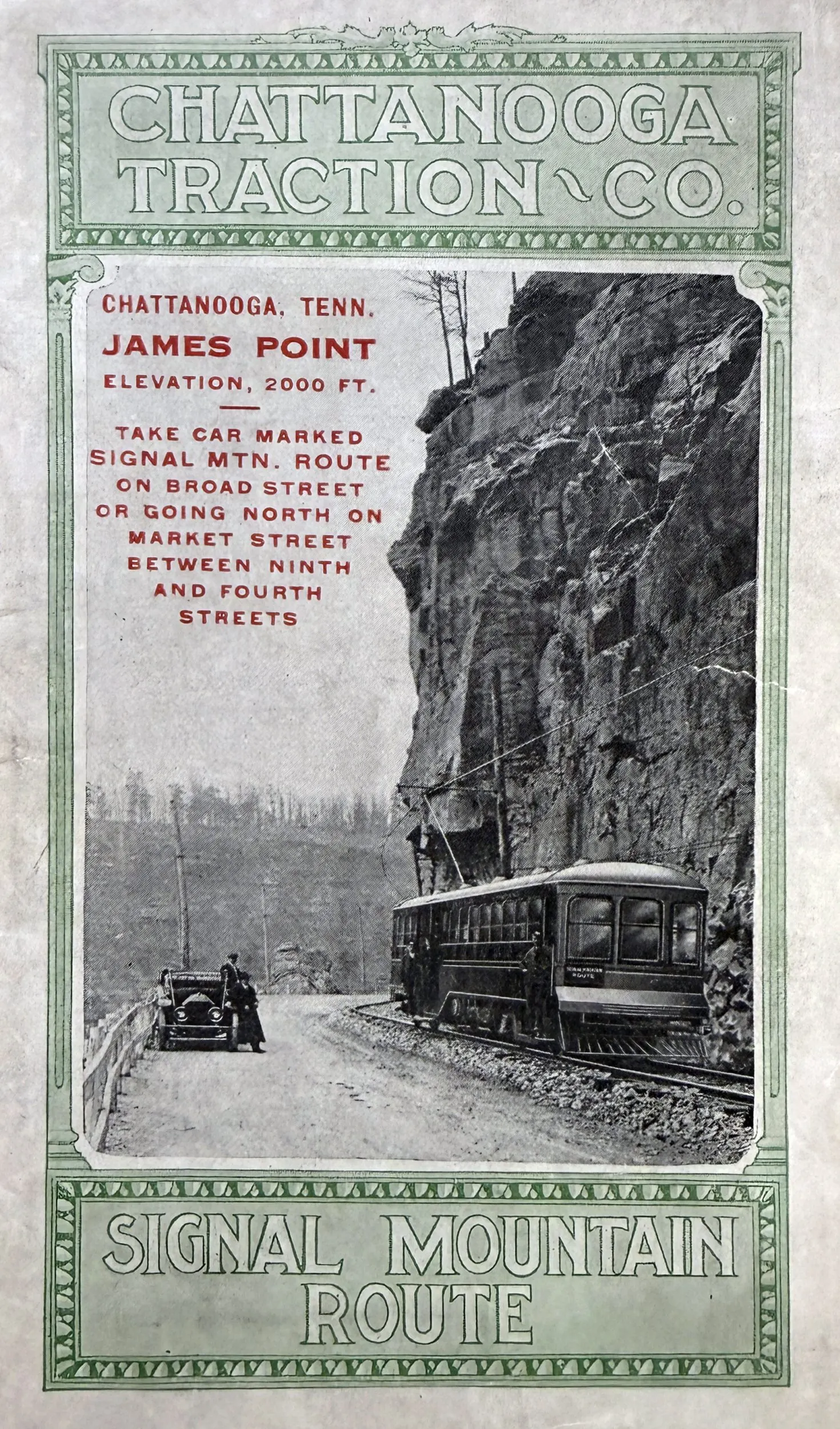
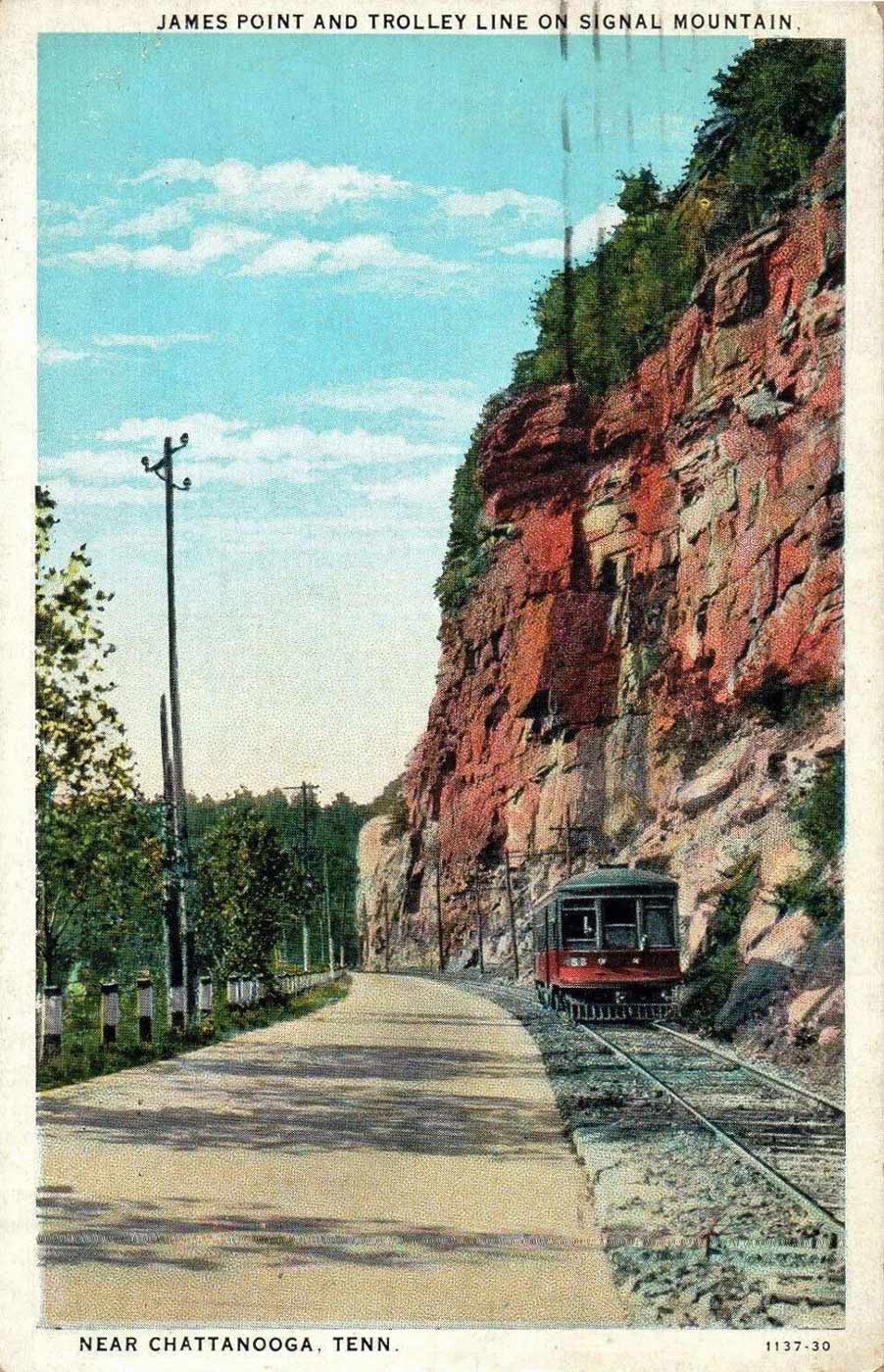
Service was inaugurated as far as James Point. Initially, passengers were met by automobiles to complete the trip to the Inn.
-
The line reached its ultimate goal, coming within a block of the Signal Mountain Inn.
-
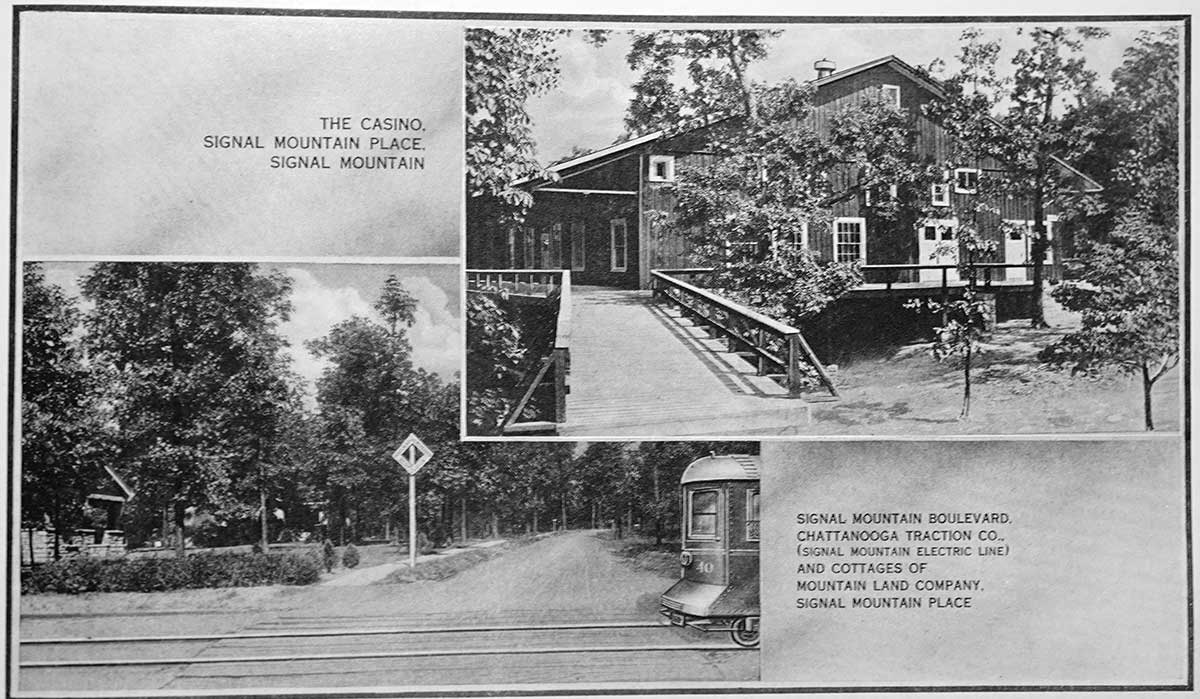
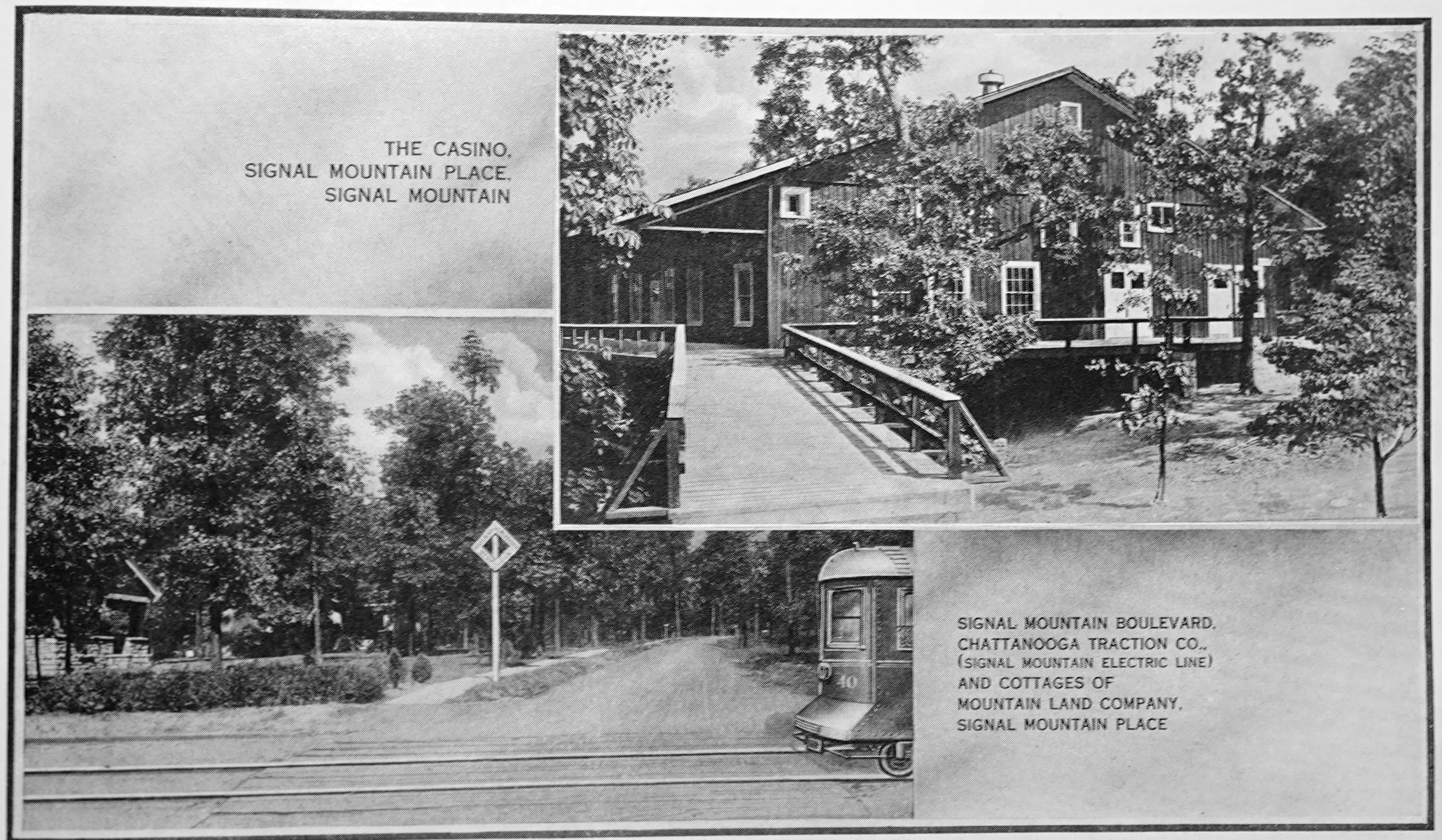
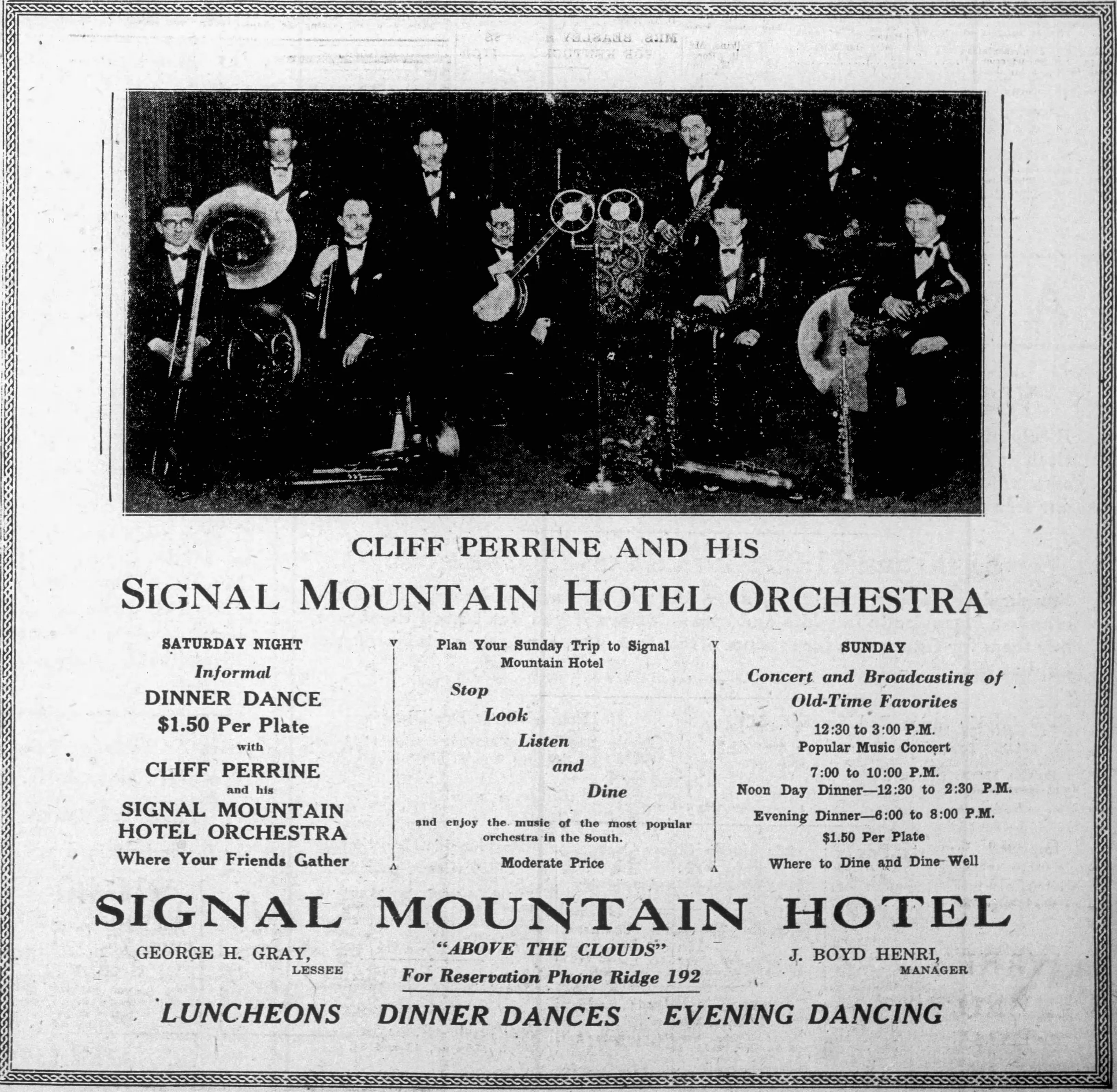
Signal Mountain Casino
-
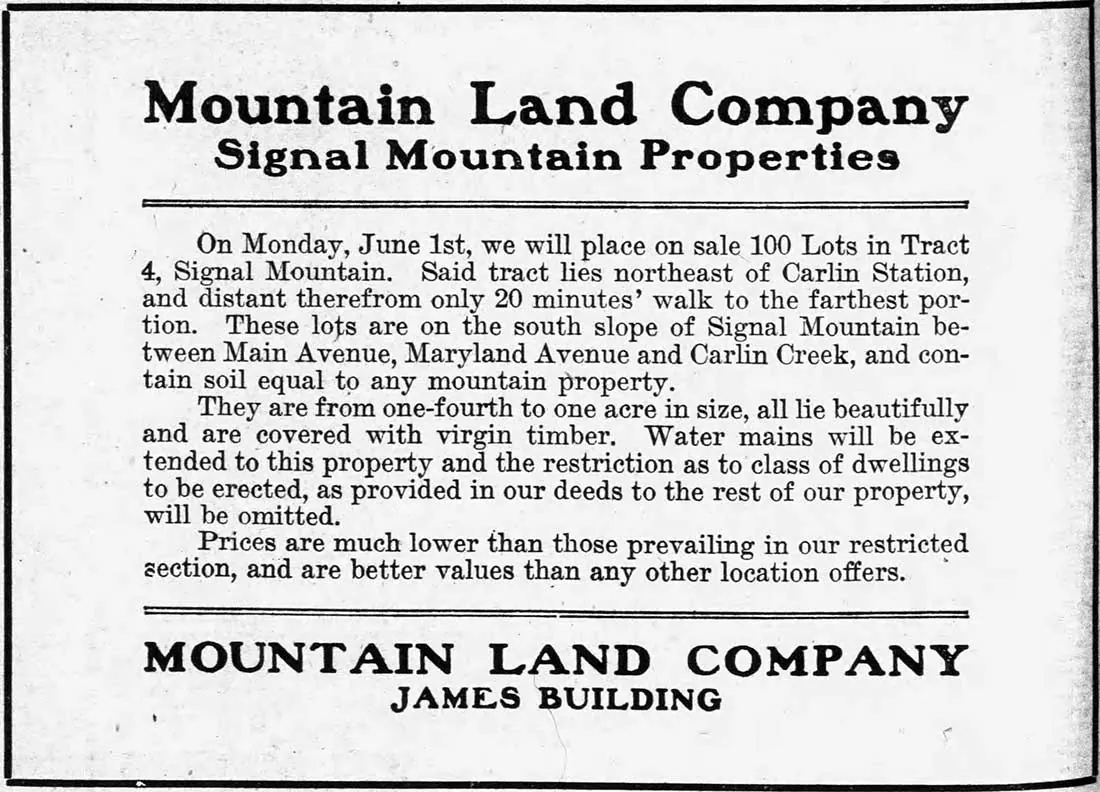
Mountain Land Company
Chattanooga Daily - Times May 31, 1914
-
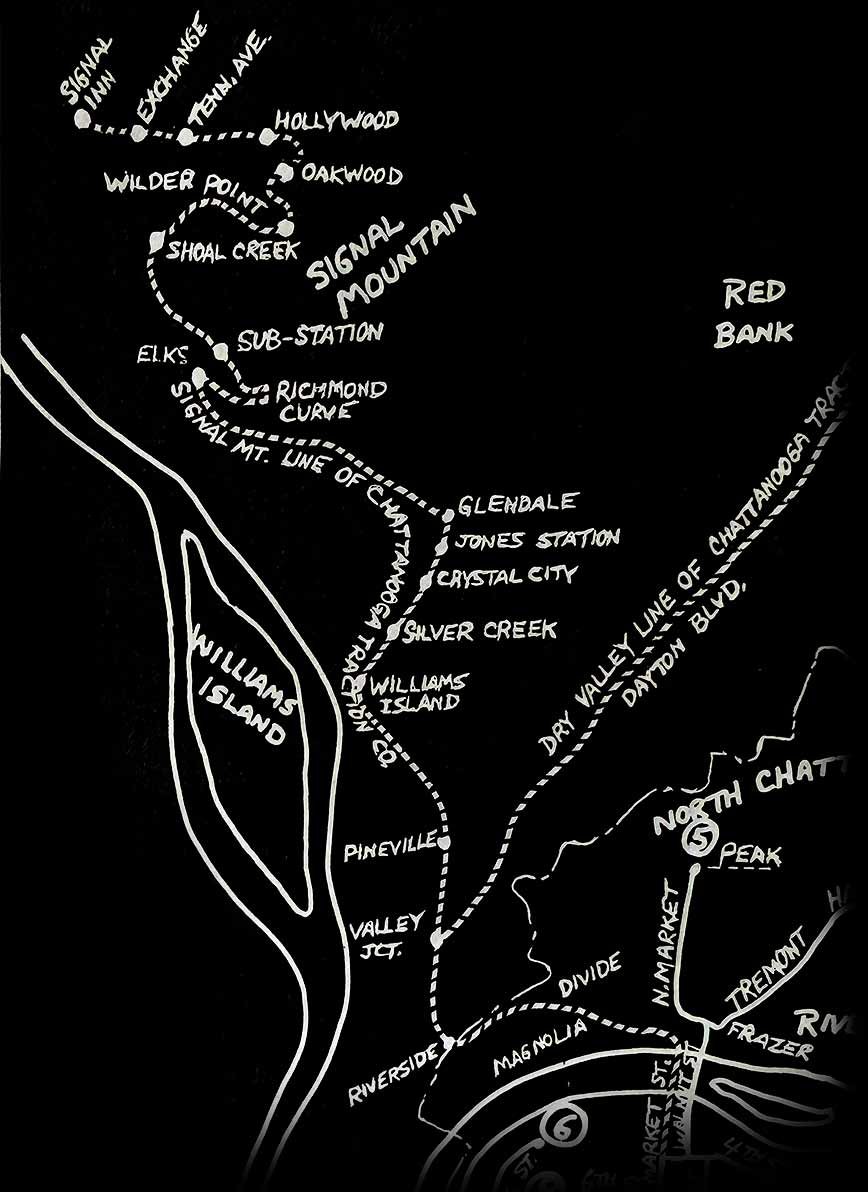
Plans were announced to extend the line eight miles through Dry Valley toward Hixson.
-
The Red Bank line officially went into operation after delays in securing copper wire.
-
Following the completion of the Market Street Bridge, the CTC secured a franchise to move its interurban service over the new structure.
-
C.E. James, the “Master Builder” of the line, passed away.
-
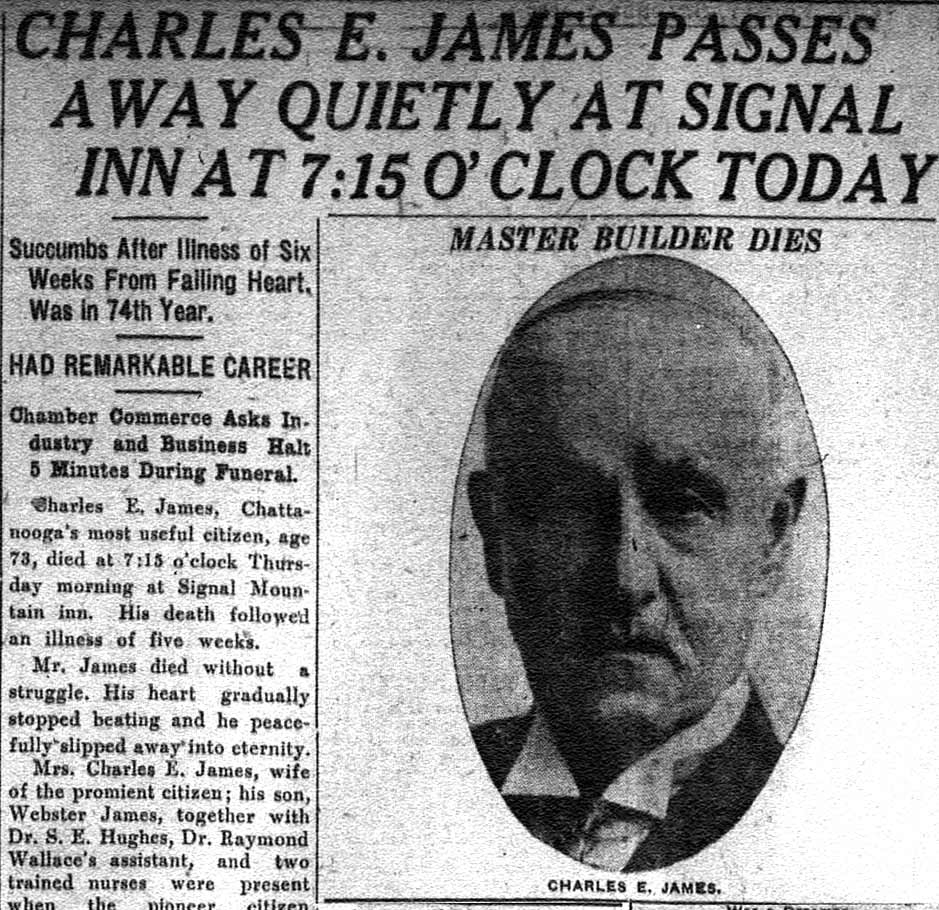
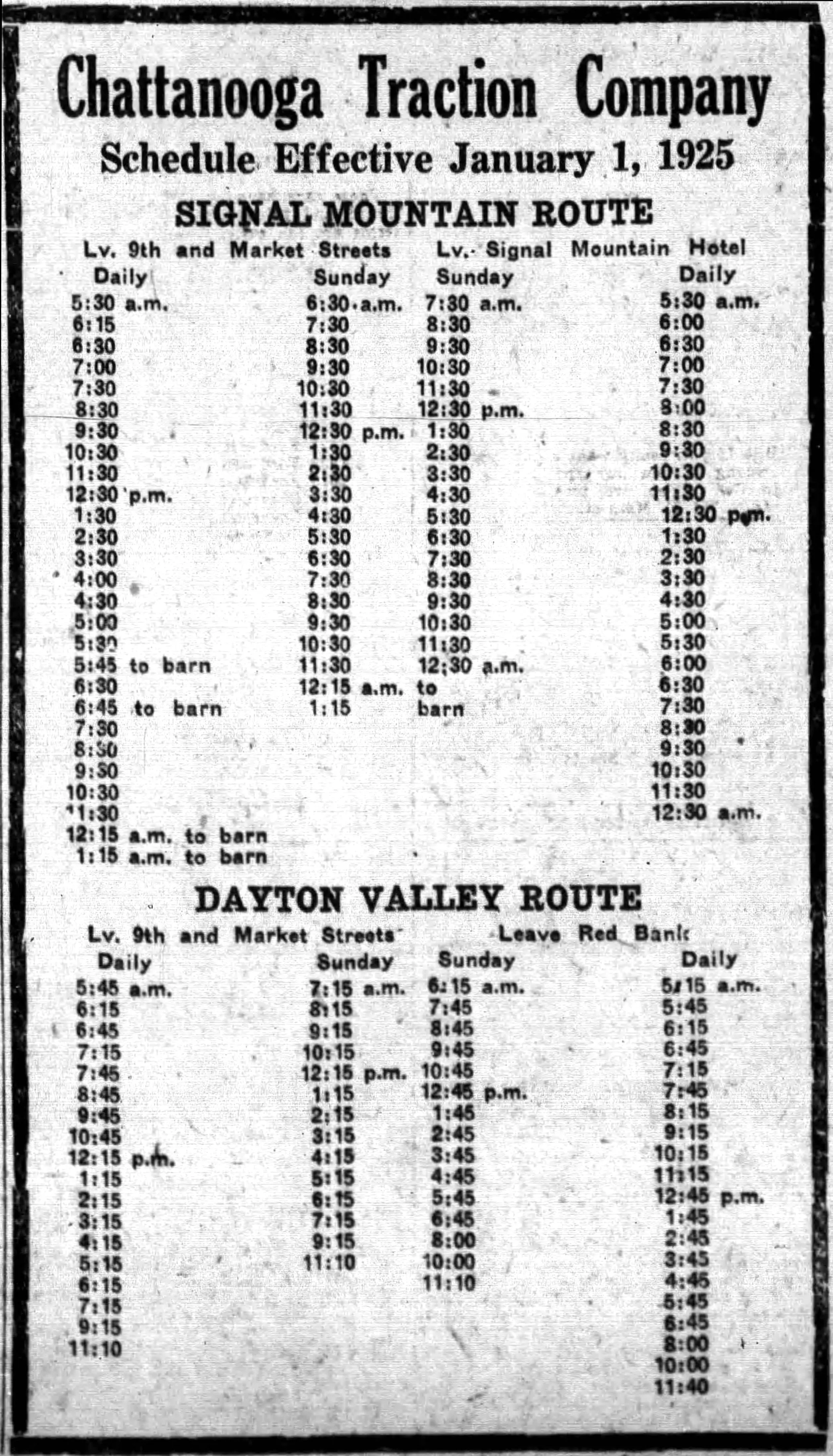
The Chattanooga News - Oct 2 1925
-
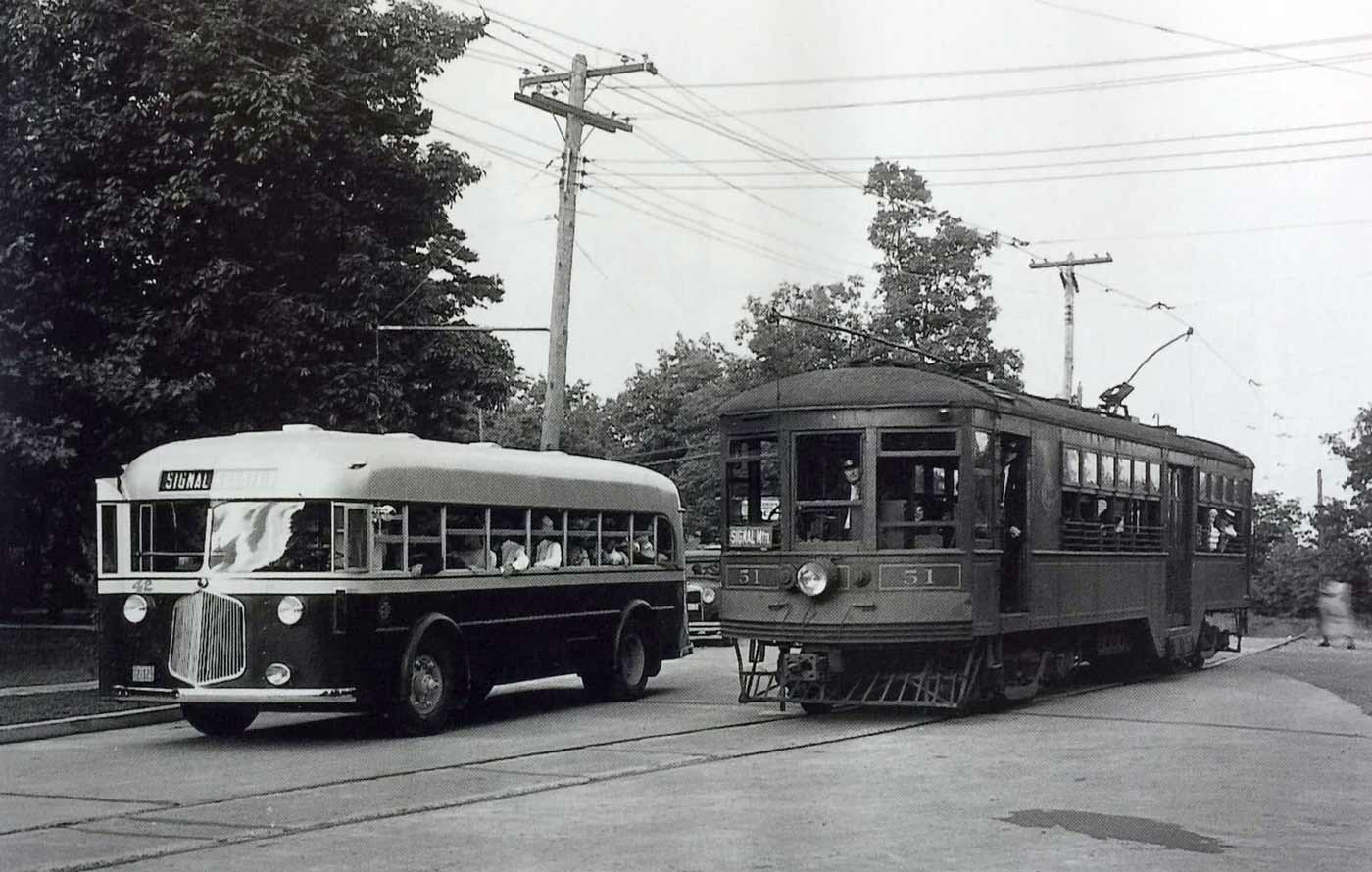
July 4, 1934 - Final Run of Passenger Trolley
-
The local owners granted an option to the CNO&TP (Southern Railway) to purchase the CTC’s stock.
-
Annual passenger numbers had plummeted from over 575,000 to approximately 133,000 due to the rise of the private automobile.
-
The Railroad and Public Utilities Commission of Tennessee authorized the CTC to abandon all passenger service.
-
The mountain segment of the line was scrapped, and the terminal property on top of the mountain was deeded to the Town of Signal Mountain.
-
Freight and passenger service to Signal Mountain officially ended, with bus service taking its place.